Two of my good friends recently got the new Fitbit something-or-other that tracks lots of cool metrics. When I noticed their matching devices, I asked what they’ve learned from all the new data they’re now collecting. After some banter, I gathered that they were merely enjoying having the data rather than doing anything differently. It got me thinking about all the great data that I collect on a daily basis (and have not yet put to good use).
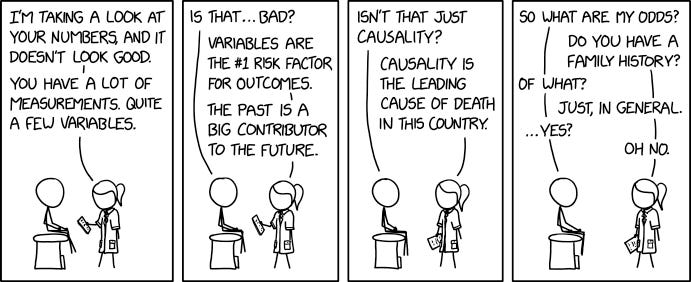
As a dutiful nerd, I do indeed love to collect data.
I keep detailed records of my (financial) spending, my calendar/time, my health metrics, and now also my baby’s daily metrics. (For the not yet inducted, babies are the ultimate opportunity to collect data.)
Before I got into daily life with a baby, I’d heard about “the baby tracking app” from a few different friends. I was tempted by the cool visualizations that the app creates, such as the one below.
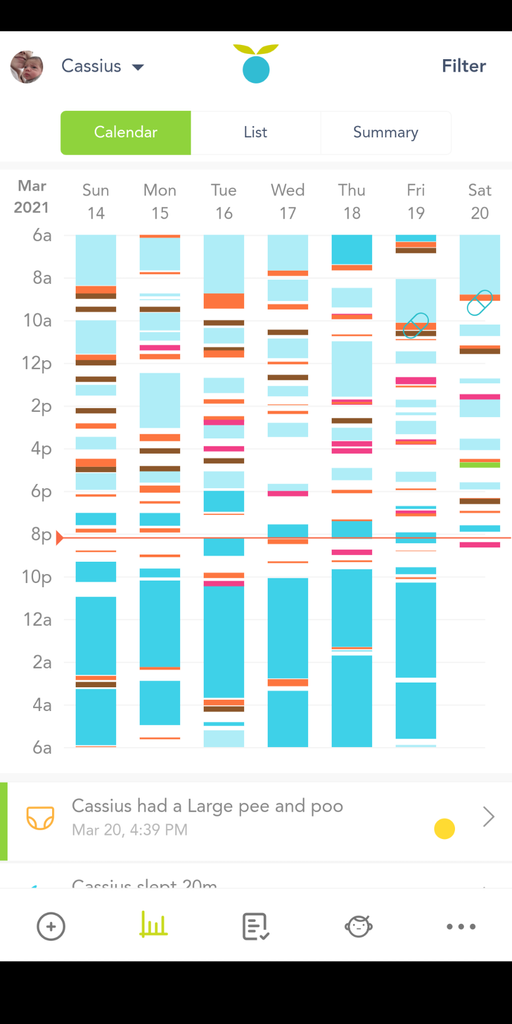
I, too, wanted to see this for my baby. However, it is 2026 and naturally, I ended up on a side quest, taking a pass at vibe coding an alternative that was deeply customized.
This led to some reminders…
Verticalized SaaS is not dead—spoiler: I bailed on my vibe coded alternative in the end
Everyone believes they have a highly custom use case but really at the end of the day, one size fits most is likely more true than not
Maintenance and bug fixing is a true time commitment, not to be underestimated
One shot vibe coding recklessly is gnarly; I missed a lot of edge cases and spent unnecessary time and energy on maintenance / bug fixing / all the boring stuff
Separately, I ultimately also realized that I didn’t want a digital solution. I opted for pen and paper instead and have been tracking baby data the old fashioned way: on a piece of paper, in a janky five column table, with check marks and time stamps that I write in throughout the day.
As I reflected, I realized that I haven’t done a ton of analysis on my data recently. At one point, I did glean some patterns in gaps between feedings, and I do regularly check to make sure we’re in the normal range for number of dirty diapers, but I haven’t truly gone exploring for hidden trends.
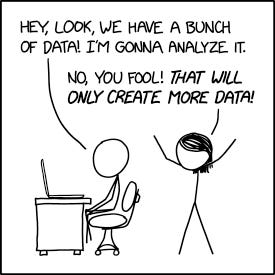
Shortly, I will be sitting down and collating the data into more digestible formats (by hand, for the fun of it!) and inspecting it for new trends and learnings. I might even make some hand drawn charts because I can. (But probably no slides for those of you awaiting a presentation…)
As I embark on this journey, I wanted to share a few reminders with you all:
One of the best practices I learned for survey writing (or any data collection exercise) is to always have an answer for, “How will you use the answers to this question / the data you collect?” If there isn’t anything actionable, then why ask the question / collect the data?
Push back the next time you’re sent on a pointless data collection mission. It’s just yield loss to collect data you won’t use!
Doing things by hand gives a stronger sense of agency (and confidence that I am thinking independently). Hand transcribing pages of longitudinal data and doing quick skims for trends is very different from following auto suggested analyses in a spreadsheet. There’s certainly a tradeoff between approaches—maybe I miss certain optimizations (e.g. there’s no app telling me when my baby is predicted to sleep the best), but I also feel more in tune with the day to day because I put on my observant goggles, rather than driving on autopilot.
Finally, you’re probably sitting on a gold mine of data, go use it for something!
If you got this far, thanks for reading—feel free to also hit ❤️ so I know I’m not writing into a black hole. And now go forth and find some data in your life to analyze.
"What will you do with the answer to this?" is a terrific question for data collectors! I use it all the time...on myself, most painfully, since i too am a data geek. :)
Love the punchy callouts on the realities of data -- (one size fits ~most... and vibe coding is not just plug and chug... you do need to debug!). I have certainly found both of these to be true! thanks again for the enjoyable read Isabella!